


Inside this issue:
YouDeserveSome.Art
There’s no such thing as a real photograph
The urge to clock, the struggle to pass
YouDeserveSome.Art
Lately I have been writing less, and painting more. There are many differences between painting and writing as a hobby but one important difference is that writing does not take up very much space. Physical art is less practical to accumulate.
So I started a small project called youdeservesome.art to give away the art I am making, hopefully to someone who was excited to get it. If you live near Oakland you should come pick something out. You deserve it.

I wanted a place where I could share pictures of the art I was giving away (and where people could share photos with me of what they did with my art), so I performed the obligatory millennial ritual and created an Instagram account: @youdeservesomeart. This was my first time using Instagram in a little while and I noticed a new toggle in the app that I hadn’t seen before:
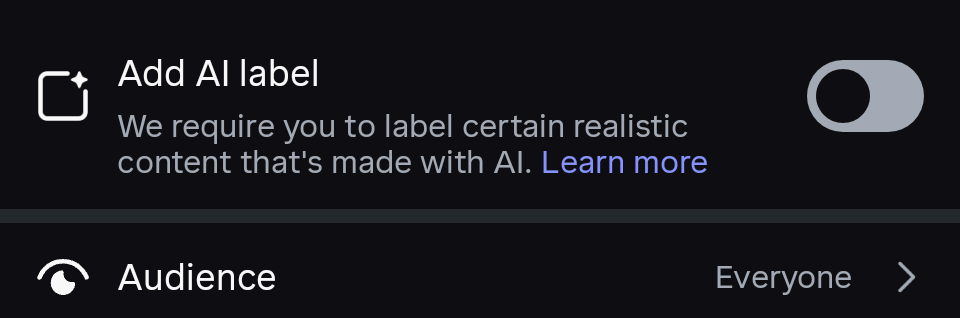
Instagram is (like many platforms right now) struggling with a torrent of AI-generated content, much of it unappreciated by Instagram users. I doubt an opt-in content label actually catches the content that people are most bothered by, but it does allow users to opt out of seeing posts with that label. That’s probably good enough to justify the existence of this little toggle, even though I suspect it is rarely used and will be quietly abandoned as soon as Instagram thinks they can get away with abandoning it.
It’s very normal for people to briefly hate new creative technologies and then forget they were ever controversial. Remember when Ratatouille bravely took a stand against motion capture animation?
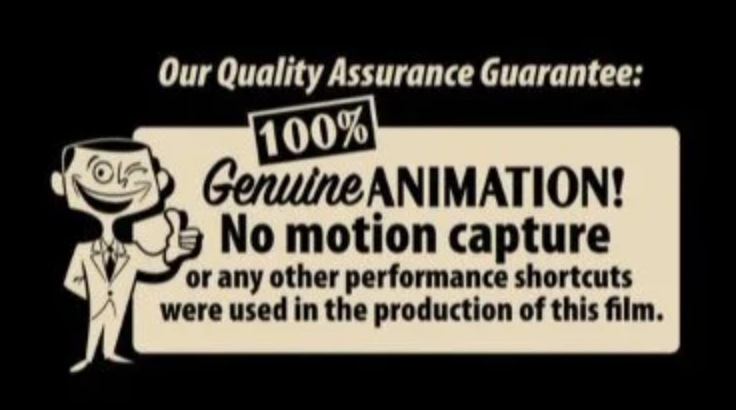
James Cameron’s Avatar series on the other hand makes extensive use of motion capture animation, but promises not to use generative AI. On the other hand, both Avatar and Ratatouille used pre-recorded soundtracks, something that was once considered controversial by audiences used to live orchestral performances and silent movies. And of course all movies depend on photography, that upstart philistine threat to the sacred art of painting:
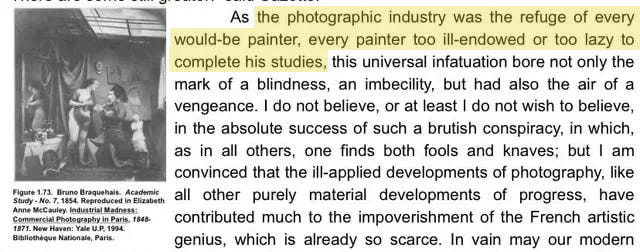
This is all healthy and natural. The world changes and people complain about those changes and then change happens anyway. In the meantime, Instagram has a toggle. You can toggle it! But when should you?
There is no such thing as a real photograph
First, and I am not trying to be annoying here, it is very funny to me that Instagram is trying to categorize pictures into "AI" and "not-AI" given that Instagram’s entire business is applying digital filters to smartphone images.
Even if you are a purist who never uses Instagram filters, there is no such thing as a "real" smartphone photograph — they are all digital approximations. The physical sensors in a digital camera can only sense one color. Smartphones use machine learning algorithms to blend multiple monochromatic images together into a single image full of colors the camera was never capable of sensing directly.
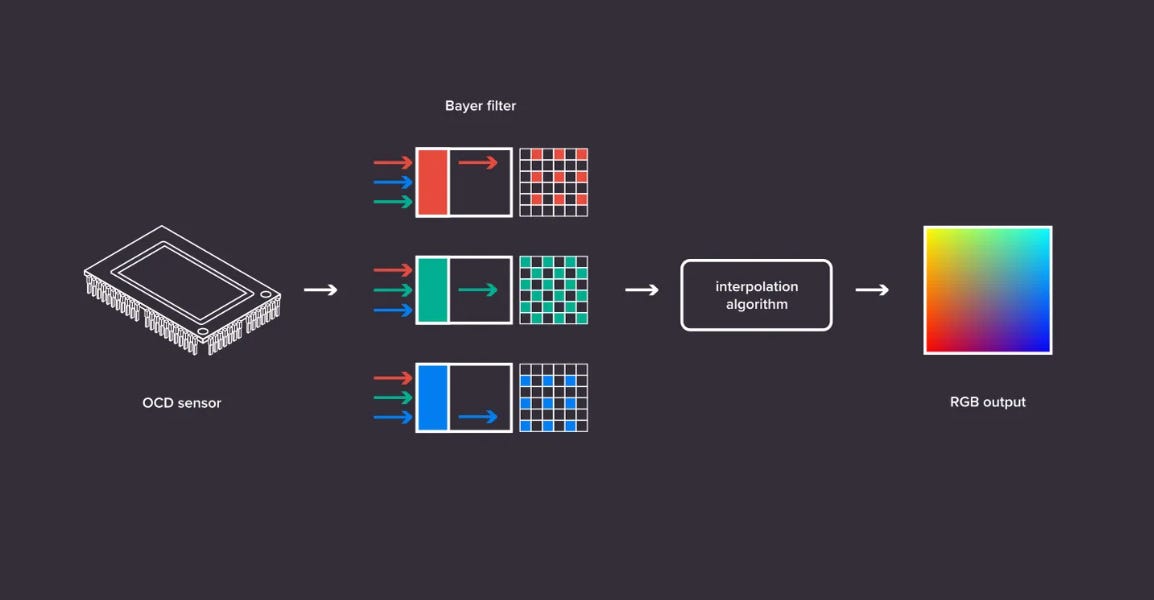
So is every digital photograph a form of AI art? I mean, probably not. I don’t think the people who want to filter AI art actually care about machine learning or procedural filters or computational photography. They are angry about generative AI.
But what about the picture at the top of this article, the first photograph I posted to my new account?
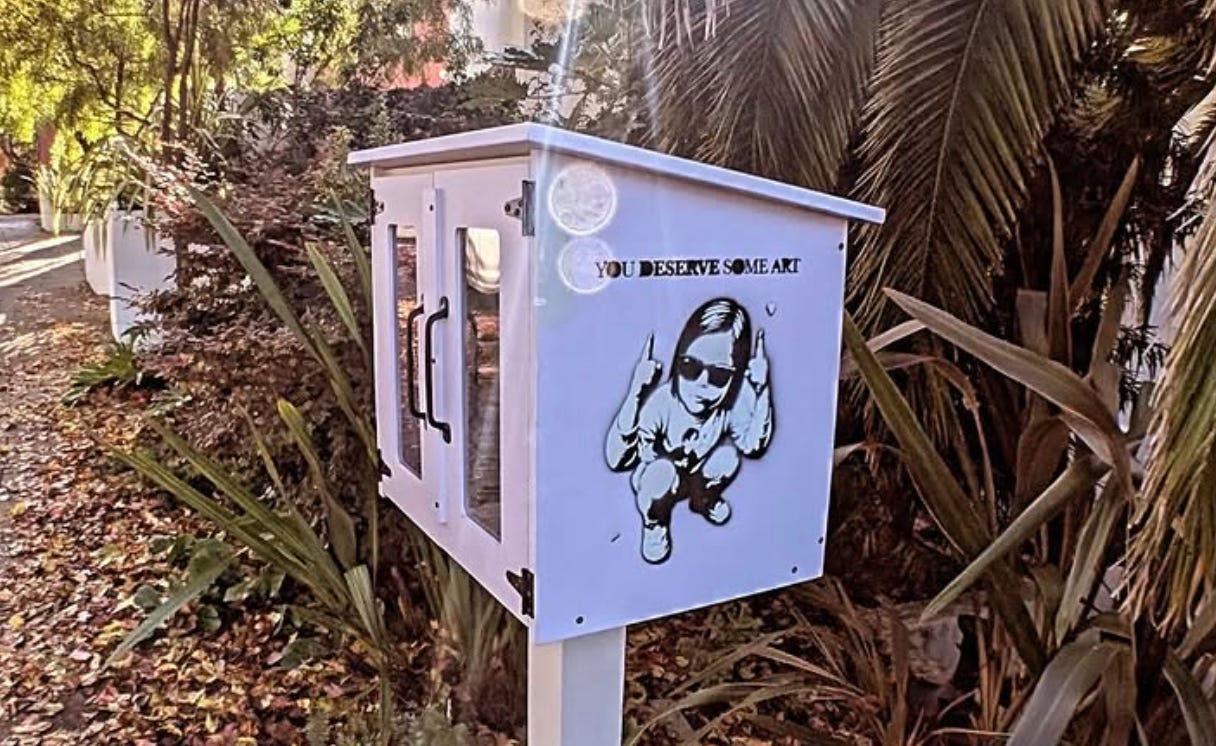
This is not an AI generated image, this object physically exists in my front yard. If you stop by and open it up, you will find art inside. It is quite real!
On the other hand, it was made with generative AI. Specifically I used ChatGPT to convert the image of my eldest daughter (originally taken by my wife on an iPhone) into a black and white graffiti stencil. Then I used Adobe Illustrator to fix the hallucinations/errors so that the image actually worked as stencil. I then cut the layers of stencils out of plywood with a laser cutter and used them to spray paint a copy onto each of the side panels. Then I took a photograph of the result (on an Android) and used Instagram to add a nice filter. Is that "made with AI"?
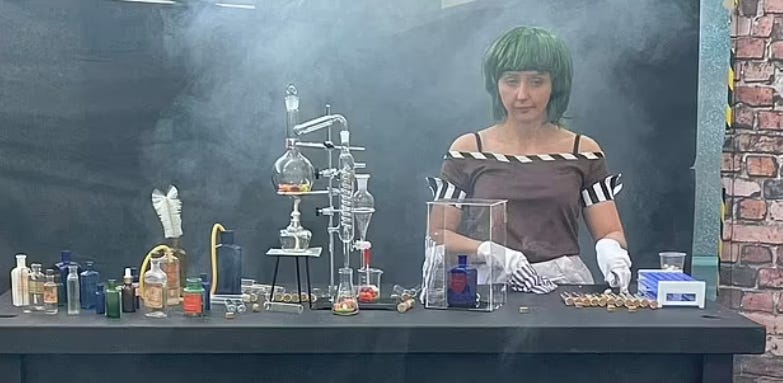
To be honest, I don’t see how it could be reasonable to extend the definition of "made with AI" to "contains anything made with AI." I know a lot about this particular piece of art because I made it myself, but it’s obviously not realistic to expect people to investigate the origin of everything they take a picture of for Instagram. Besides, what if the photographer is criticizing what’s being shown? Should pictures making fun of Willy’s Chocolate Experience be considered "made with AI"?
The photo of the artbox is interesting because it is minimal. Using ChatGPT here was basically a convenience step. It’s completely viable to go directly from digital photograph to Adobe Illustrator and the result would not look particularly different, it just would have taken more time. ChatGPT was a relatively minor contributor to the stencil and the stencil is itself a relatively minor component of the final image. To me, labeling a photo of the artbox "made with AI" is almost as reductive and silly as treating every digital photograph as "made with AI."
Let’s consider some more interesting cases.
The urge to clock, the struggle to pass
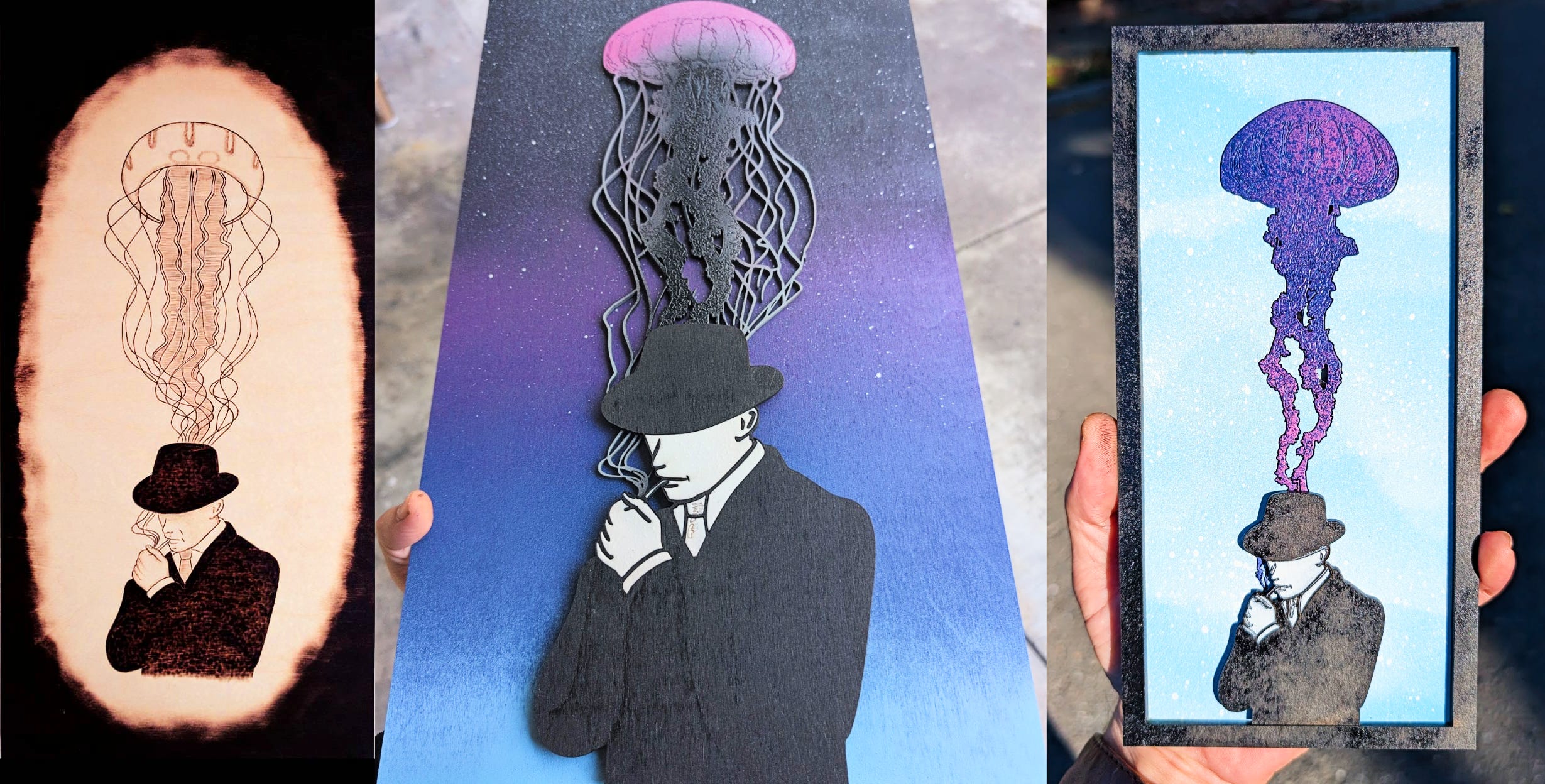
I made the woodburn on the left in 2016 and sold it to a smoke shop in Austin. I drew it by hand in pencil and then burned in the design with a pyrography pen. This year I decided to recreate it. I was never completely satisfied with the original jellyfish, so I used Midjourney to design the exact jellyfish I wanted and then used Illustrator to blend the tendrils of that jellyfish into tendrils of smoke. I cut the pieces out with a laser cutter, spray painted them individually and then reassembled them. That’s the middle version. Then I simplified the design to make a small version (on the right) to give away in the youdeservesome.art box.
AI’s contribution here is more substantive. ChatGPT was just a shortcut in creating the stencil, but Midjourney’s jellyfish is nicer than anything I can draw. I authored the composition, chose the materials and colors, drew the figure and simplified the jellyfish to integrate it into the piece — but Midjourney actually drew the jellyfish, and for many people that means the whole piece is creatively 'tainted.'
The logic of taint leads to some funny outcomes, in my opinion. Take this holiday wreath we made this year:
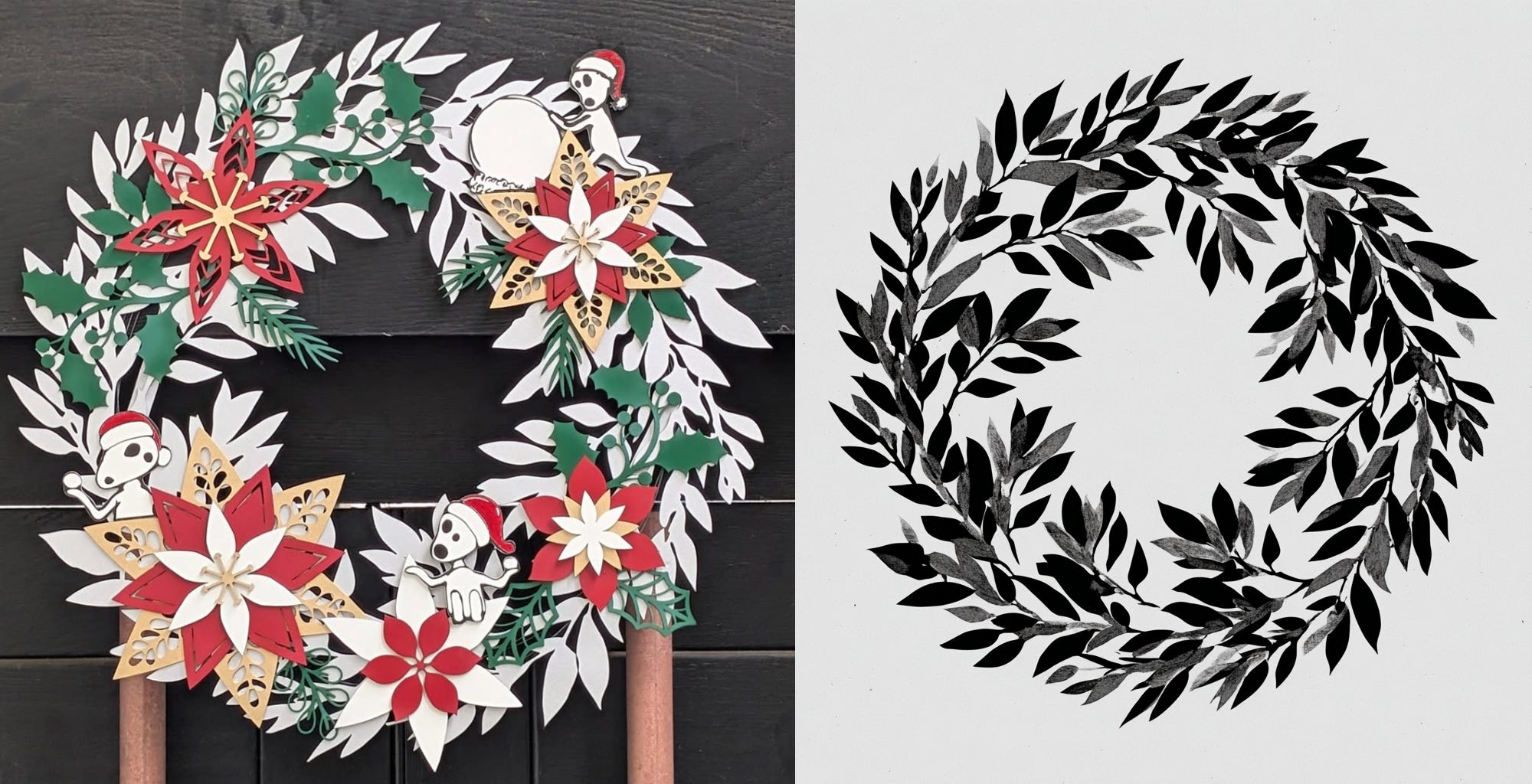
We designed the flowers (and the green leaves) using a set of shape stencils we got from Etsy. I drew the kodama myself. We used Midjourney to design the silver background leaves. They’re definitely important to the design (structurally as well as aesthetically) but it seems strange at best to describe the image on the left as "AI art" just because the image on the right was one of the component ingredients. I think what people mean by AI art is closer to this:
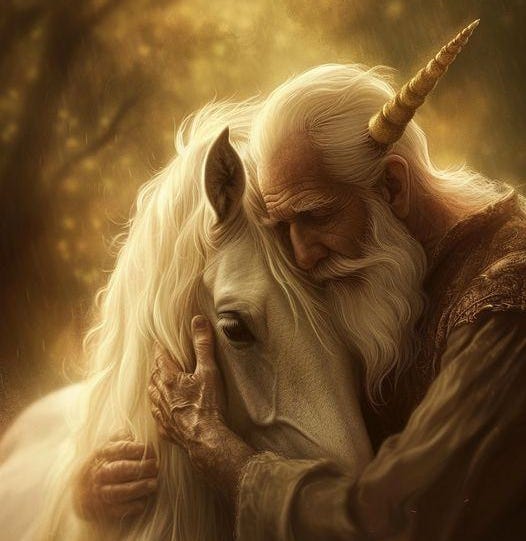
I agree that art like this example is bad but I don’t think being AI generated does a good job of explaining why it is bad. It is bad because it is lazy, schlocky, ugly and boring. Even if someone had painstakingly painted it by hand it would still be schlocky, ugly and boring. Seeing art like this and concluding that AI art is bad is a category error. Bad art is common in every medium and the only thing it does is make good art look good.
People think what they hate about AI art is artifacts, but I don’t find that particularly convincing. People like craquelure and lofi music and tintype photography and glitchcore and impressionism and datamoshing and lots of other forms of artistic expression that leave behind artifacts of how they were made. There is no obligation for new artistic techniques to be undetectable and there is no expectation that art should be a literal mirror of reality. Artifacts have always been part of art.
The idea that artifacts are a problem is just a way to justify the false (but common) belief that you can reliably know when something was made with AI. Take this image for example, posted by Tim Cook to promote the Apple TV show Pluribus:
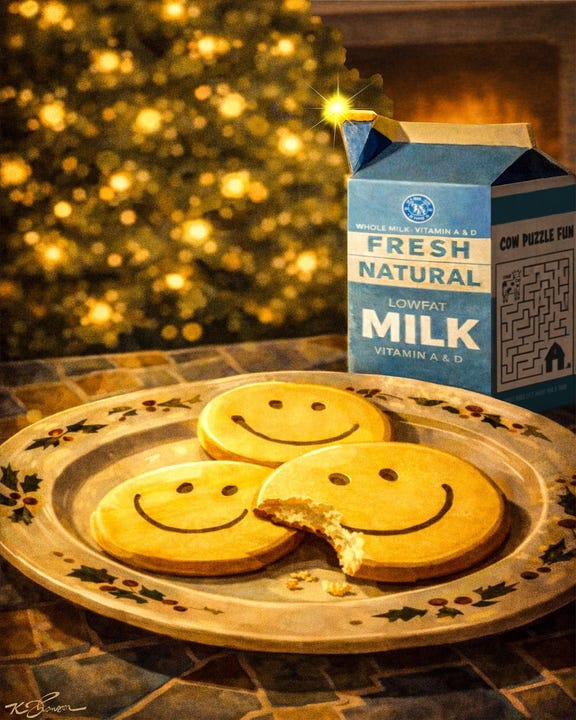
Cook’s audience reacted with reflexive disdain for "AI art", but the style of this piece is consistent with the style of the artist who signed it, Keith Thomson. The more surreal elements of the piece (like the milk being simultaneously whole and low-fat) are plausibly explained by the plot of the show being promoted. The strangeness of the maze might be a stylistic choice, or it might be caused by content aware fill techniques that have been available in Photoshop since 2010.
Or this could be the output from some kind of generative AI — perhaps he used a model privately trained on his work. Or the public models may have been trained on enough of his previous work that he could create an image like this just by prompting. Unlike my own art, I have no way of knowing how it was made. To be honest, I'm not convinced it really matters. The point of a witch hunt is never really to find witches.
The discourse around AI content reminds me of the trans debate: the urge to clock, the struggle to pass. Transphobes and people who hate AI art are both hyper vigilant against pretenders to an identity they find sacred. Both are trying to anchor a complex and fuzzy reality to a simple, essentialist definition. This is a woman. This is art.
Good luck to them! Essentialists tend to overestimate how easy it will be for people who "know it when they see it" to agree with each other.1 Woman and artist are not simple concepts and will never fit into simple definitions. The only meaningful way to define either category is self-determination. A woman is a person who sees themselves as a woman. An artist is a person who sees themselves as an artist. Art is whatever an artist says it is.
So, what makes something "AI art"? After careful consideration, I believe I have discovered the answer.
As a practical example, try asking a group of racists to create a shared definition of white.